
Have you ever felt puzzled: your child can recognize many letters, even read their own name, but when it comes to writing, they immediately become clumsy and frustrated? The pencil slips from their hand like a stubborn fish, lines are crooked, they press so hard the paper tears, and after writing a few characters, they complain of fatigue or refuse to try.
Many parents, myself included, attribute this to “the child is too young, their hand muscles are weak” or “lack of patience.” So we search for shortcuts: tracing books, numeric workbooks, and guiding the child hand-over-hand. Often, this backfires—the child develops stronger resistance to writing, and parent-child tension increases.
But what if we shift perspective: the problem may not lie in “writing” itself, but in the years before picking up a pencil.
In Montessori education, preparation for writing begins long before the child holds their first pencil. It is a systematic process respecting the child’s developmental rhythm. It does not rush results but focuses on building the foundational skills necessary for writing. Some cleverly designed Montessori toys are the unsung heroes of this secret preparatory work.
Today, we reveal how seemingly unrelated toys, through daily play, cultivate stable, dexterous, and confident writing hands in children.
When Children Say “I Can’t Write”: What Challenges Are They Really Facing?
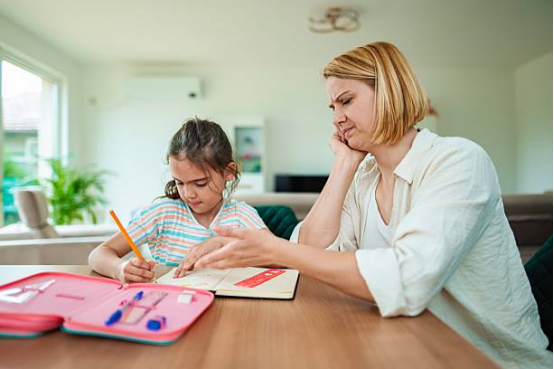
Writing is an extremely complex neuromuscular coordination activity. It is far more than just holding a pen. To write fluently, children need to integrate multiple foundational skills, which we can call the four cornerstones of writing preparation:
Cornerstone 1: Tripod Grip Strength—The “Throne” of the Pen
Writing uses a dynamic tripod grip (thumb, index, and middle fingers working together), which is very different from holding a spoon or grabbing blocks. This requires precise control and independent movement of small hand muscles (intrinsic muscles).
Cornerstone 2: Hand-Eye Coordination & Visual Tracking—Let the Eyes Guide the Hand
Children need to track lines accurately with their eyes and transmit this visual information to their hands in real time. They also need spatial judgment to know letter size and placement within a grid.
Cornerstone 3: Wrist Stability & Arm Strength—The “Stable Writing Platform”
Fingers perform fine movements while the wrist and arm provide support. Insufficient shoulder or arm strength leads to dragging the pen with the whole arm, making writing laborious and hard to control.
Cornerstone 4: Left-to-Right Operation & Focus—The Mental Habit of Writing
This is not just directional training but also cognitive pattern and focus cultivation. Children need to complete tasks sequentially, maintaining attention long enough to finish a line or even a page of writing.
Without these four cornerstones, asking a child to write is like asking a toddler who hasn’t learned to crawl to run—they will fall, resist, and feel deep frustration.
Montessori Toys Specialized Training: When “Pinching” Becomes the Most Fun Pre-Writing Lesson
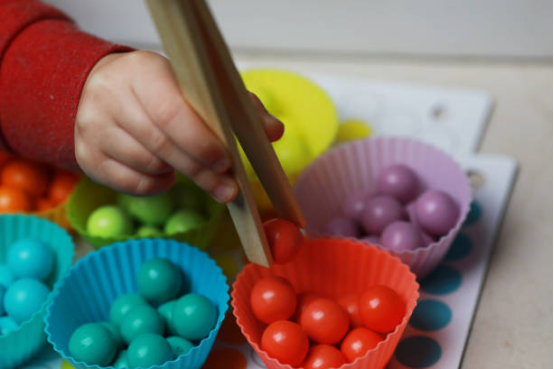
Montessori’s “Practical Life” activities silently cultivate these cornerstones. One activity stands out as a specialized tripod grip trainer: the bead-matching Montessori toy.
Observe a 4-6-year-old interacting with this “work”:
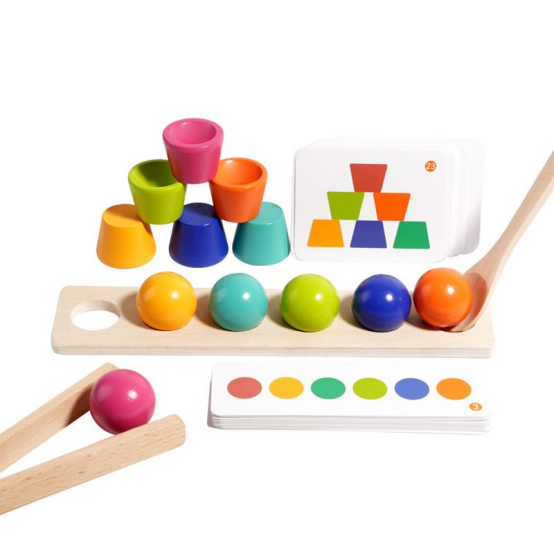
A tray of colored beads lies scattered like soldiers waiting to line up. Beside it is a wooden base with colored grooves. Connecting them is a small child-sized wooden tweezer.
The child picks up the tweezer. Their brain immediately issues instructions: “Pinch one side with thumb and index finger, and support with middle finger underneath.” This standard tripod grasp mirrors the future pen grip perfectly. Not a coincidence—it’s carefully designed Montessori equipment.
The challenge begins. The child must aim for a bead, open the tweezer, and grip it steadily—not too hard (it will spring away), not too loose (it will fall). The tiny muscles responsible for fine motor control are intensely working, learning, and memorizing.
Once successful, the child must guide the bead with their eyes and arm to the matching slot, releasing it precisely. This trains hand-eye coordination and visual tracking.
If the bead drops or is placed incorrectly, the child must self-correct and retry, developing focus, patience, and problem-solving skills.
Notice? At no point is it explicitly stated, “This prepares you for writing.” The child is immersed in color matching, tool use, and task completion. Meanwhile, a precise hand infrastructure project silently progresses: finger strength, control, independence, and coordination are trained through joyful pinching.
This is Montessori’s brilliance: transforming a future academic challenge (writing) into an immediately achievable and enjoyable game-like work. Practice is hidden in the work.
Beyond Tweezers: Fun Pre-Writing Activities at Home
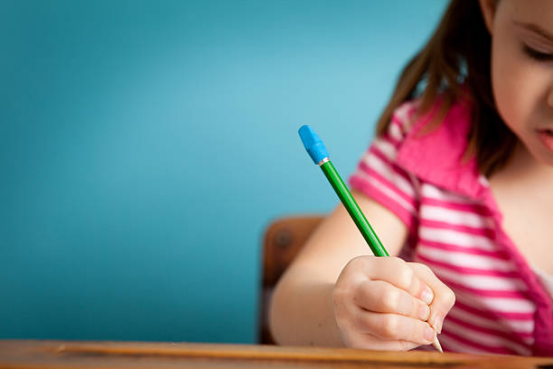
Writing preparation doesn’t rely solely on specialized Montessori toys. Your home can be a rich preparatory classroom. Some simple, zero-cost activities also train the “writing cornerstones”:
- Kitchen “Power Lifts”: Have children twist open jars of varying sizes. The rotation mimics pen adjustment movements and strengthens wrist rotation and tripod grip.
- Bathroom Artist: Let children “draw” on bathtub walls with shaving cream or shower gel. This reduces pencil fear while exercising shoulder and arm muscles.
- Punching Artist: Provide a blunt needle and sturdy cardstock to punch along lines, cultivating focus and fine motor coordination.
- Clay Engineer: Roll clay into thin strips with thumb and index finger, or cut with plastic knives, reinforcing finger separation and strength.
- “Walking the Line” Game: Tape lines on the floor and have children walk heel-to-toe like a balance beam, enhancing balance and core strength for stable posture.
Key Q&A on Writing Preparation
Q: When should these pre-writing activities begin?
A: Ages 4-6 are the golden preparatory period. Fine motor skills develop rapidly, and children enjoy “adult-like” tasks. Focus on observing interest and readiness. When children enjoy stringing beads or using scissors or tweezers, it’s the perfect time to introduce these activities. Learning through play surpasses forced tracing before readiness.
Q: My child grabs beads with hands, refusing tweezers. What should I do?
A: Totally normal! Hands-on exploration is a valuable sensory experience. Demonstrate usage yourself slowly and playfully, making it enjoyable (“Wow, gripping this feels fun!”). You can introduce gentle challenges: “Who can return all beads with tweezers faster?” or allow initial hand use, then encourage tweezers for the next bead. Interest precedes skill; enjoyment fosters development.
Conclusion: The Best Preparation Starts by Forgetting “Writing”
The deepest insight: to help children write well in the future, we must first forget teaching writing.
Shift focus from letters on paper to the child’s exploring hands. Our role is to provide rich, interesting, appropriately challenging experiences that make their hands strong, precise, and coordinated.
Professional tools like the bead-matching Montessori toy integrate multiple pre-writing objectives into an enjoyable self-directed task. It is an “intelligent” tool, silently guiding development.
When you see a child fully concentrating on pinching a bead, their face full of determination, recognize its significance: they are not just playing a color-matching game. They are laying the first and most solid foundation for their future learning world—a pair of confident, dexterous, all-capable hands.
From this perspective, investing in a high-quality Montessori toy is investing in your child’s readiness to face future writing and creative challenges. Let preparation begin with play, and confidence grow at the fingertips.