“It doesn’t light up or sing; why would a child like it?”
This is the intuitive doubt many parents have when they first see classic Montessori toys. In a world full of electronic toys with lights and sounds, these teaching aids—made of natural wood, simple in design, and even a bit “high-cold”—seem out of place.
However, it is precisely this “silence” that contains the most profound wisdom of Montessori education. Today, we won’t talk about theory; we will share a true story of how a “silent” Montessori toy completes a profound education through a wordless dialogue with a child.
01 Confusion: Why Does the Excitement of Buying New Toys Never Last More Than 5 Minutes?
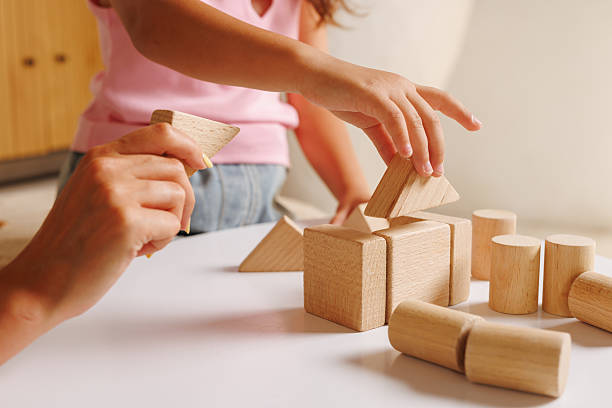
Sophie is 4 years old, a typical “high-energy” toddler. Her home is piled with various Smart Montessori Toys that play music and flash at the press of a button. But Sophie’s interest in them comes fast and leaves even faster. After playing for a few minutes, she throws them aside, shouts “boring,” and runs to scroll through an adult’s smartphone.
Her mother was anxious. She noticed her daughter struggled to finish listening to a single story, and her actions were always scattered. Concentration became the quality she desired most for her child. Just as she was about to accept that “all kids are like this,” she encountered the philosophy of Montessori by chance.
She learned that those carefully designed Montessori toys, which discard redundant stimuli, are not meant to attract children with external noise but to awaken their inner desire for exploration and focus. Half-doubting, she decided to start with the most basic teaching aid.
02 First Encounter: Learning Begins Only When the World Quiets Down
She chose a set of wooden color sorting Montessori toys. When she opened the box, she was almost disappointed: it was just a wooden tray with several grooves and a pile of small wooden cylinders in corresponding colors. No instruction manual, no electronic screen—it was as quiet as a piece of art.
Following the Montessori Method she had learned, she didn’t rush. She simply placed the Montessori toy on a small rug in front of the child, sat down quietly, and demonstrated the process with slow, clear movements.
She showed how to take out the colored cylinders, scatter them, and then observe to put each one back into its matching color groove.
Throughout the demonstration, she did not say a single word. Once finished, she gently pushed the toy toward her daughter, stepped back, picked up a book, and truly began to read (rather than pretending), leaving the child an undisturbed, independent space.
03 Immersion: A 45-Minute “Color Meditation”
What happened next moves Sophie’s mother to this day. Sophie didn’t act immediately; she stared at the Montessori toy for about ten seconds.
Then, she reached out her small hand, carefully picked up a red cylinder, searched the tray with her eyes, and tried to place it in a groove—wrong, that was orange. She took it out and continued searching until a light “click” sounded; the red cylinder fell perfectly into its “home.”
At that moment, a faint, almost imperceptible light flashed across her daughter’s face. She didn’t cheer; she simply threw herself more intently into the next one. Minutes passed—15 minutes, 30 minutes… the only sound in the living room was the slight noise of the cylinders touching the wooden tray. Her mother peeked at her watch; her daughter maintained that serene and concentrated demeanor.
She encountered difficulties, hesitating for a long time when distinguishing between dark blue and light blue, comparing them repeatedly. Her mother resisted the urge to give a hint. Finally, after rounds of visual discrimination and self-correction, all cylinders returned to their correct positions. The daughter let out a long breath and looked up, her eyes filled with the calm of immense satisfaction from completing a task, rather than the over-excitement of playing with electric toys.
The entire process lasted a full 45 minutes.
04 Core: The Educational Science Behind Silent Design
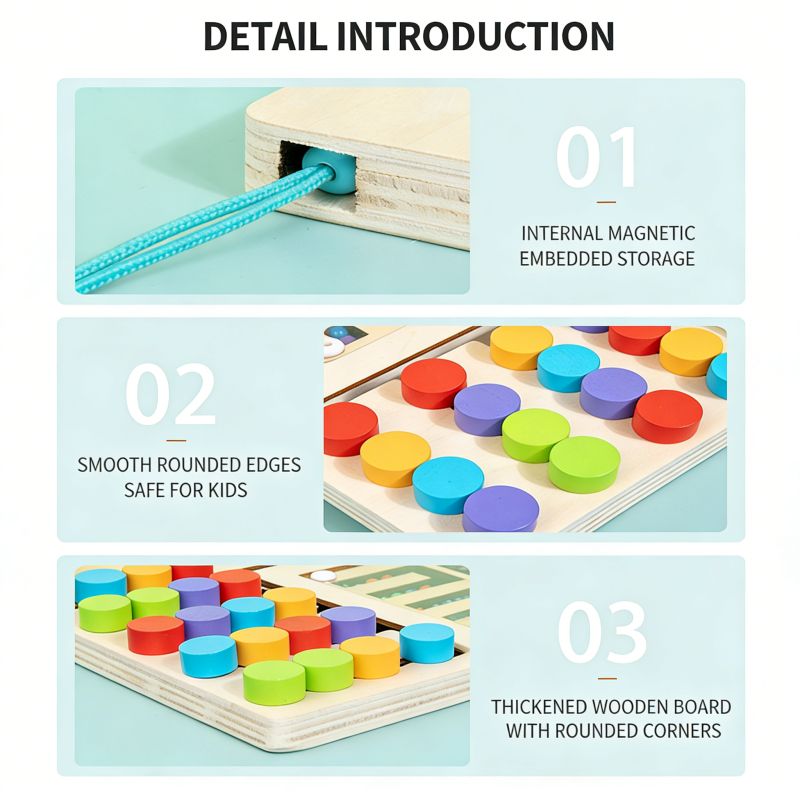
This quiet “color meditation” was no accident. It is the brilliance of classic Montessori toy design. This color sorting set perfectly embodies the core principles of Montessori aids:
- Isolation of Quality: The goal is pure and singular: color matching. All cylinders are identical in shape, size, and weight; the only variable is “color.” This eliminates distractions, forcing the child’s attention to focus like a laser on the single challenge of distinguishing colors.
- Control of Error: Each groove corresponds to only one colored cylinder. If placed incorrectly, it either won’t fit or there will be an extra cylinder with nowhere to go. Success or failure is judged by the material itself and the child’s observation, without adult intervention. This protects the child’s dignity and fosters independent problem-solving.
- Repetition of Work: After finishing, Sophie didn’t stop; she poured them all out and started over. What seems like boring repetition to adults is, for a child, the strengthening of neural pathways and a necessary path toward mastery and a sense of inner order.
Discover the science of deep play: [Explore Professional Montessori Materials]
05 Transformation: Visible Abilities and Invisible Character
After that experience, changes occurred quietly. Sophie remained lively, but she clearly gained the ability to “settle down.” She could patiently finish a complex puzzle or organize the books on her shelf by herself.
More profoundly, her mother observed the sprouting of precious character traits in her daughter:
- Independence: She started saying, “I’ll do it myself,” and her first reaction to difficulty was no longer calling for Mom but trying different methods.
- Logic and Order: When playing with other toys, she spontaneously began categorizing and sequencing.
- Perception of Subtle Beauty: She would marvel at the changing colors of leaves in the sun, using detailed descriptions like “pale green” and “orange-red.”
06 Choice: Why a Good Montessori Toy Is Worth the Investment
Sophie’s story is not unique. It reveals an essence: true learning occurs in deep concentration, which must be born from within and cannot be forced by external entertainment.
Comparison of Value
|
Feature |
Standard Plastic Toy |
Premium Montessori Aid |
|---|---|---|
|
Material |
Synthetic Plastic |
Natural Solid Wood |
|
Goal |
Passive Entertainment |
Active Sensorial Refinement |
|
Durability |
Easily Broken |
Lasts for Generations |
|
Focus |
Short-term Stimulation |
Long-term Habit Formation |
Frequently Asked Questions (FAQ)
Q1: My child tried it once and lost interest. Is Montessori not for them?
A: Don’t jump to conclusions! A lack of interest could be due to a fast demonstration, a noisy environment, or it might not be their current “sensitive period.” Try to re-demonstrate with slower movements when the child is in a good mood, and ensure the environment is quiet and orderly. Patience is key—trust their freedom to choose their “work” time.
Q2: These look simple. What’s the difference from cheap wooden toys?
A: The difference lies in precision. Cheap imitations often have inaccurate colors or sizing errors that cause the control of error to fail. A genuine Montessori aid uses non-toxic water-based paints and hand-polished edges to ensure safety and educational effectiveness. You are paying for a century of validated scientific design.
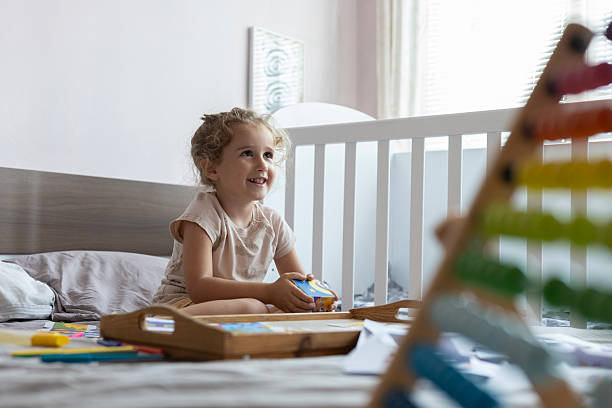
When the living room is filled with the noise of electronic toys again, Sophie occasionally takes out that color matching board, spreads her small rug, and begins her own quiet and abundant “work” time.
For a child, the most precious moments of growth are not when they are being entertained, but when their brows are furrowed, fully concentrated on overcoming a challenge they chose themselves.
A good Montessori toy is a silent and steadfast companion. It doesn’t provide answers; it provides a path to the answer. It doesn’t manufacture happiness; it guards the process of lasting satisfaction arising from within. This is a gift that will benefit a child for a lifetime.