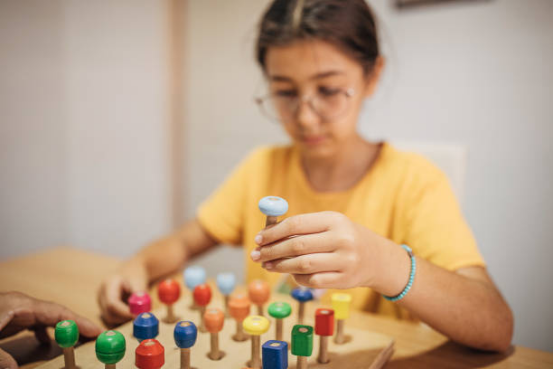
“Mom, let me help!”
When your child stands on tiptoes wanting to participate in washing dishes, sweeping, or folding laundry, what is your first reaction? Is it a polite refusal out of fear they’ll get wet or create a mess, or do you gladly accept this “clumsy assistance”?
If you often choose the former, you might be unintentionally missing out on a gold mine of Montessori education.
Your kitchen, living room, and balcony are far richer and more authentic than any professional Montessori classroom. Today, we move beyond complex “educational tools” to discuss how to transform the most mundane daily routines into a super training ground for focus, coordination, independence, and confidence.
The Misunderstood “Trouble”: Why Children Obsess Over “Work”
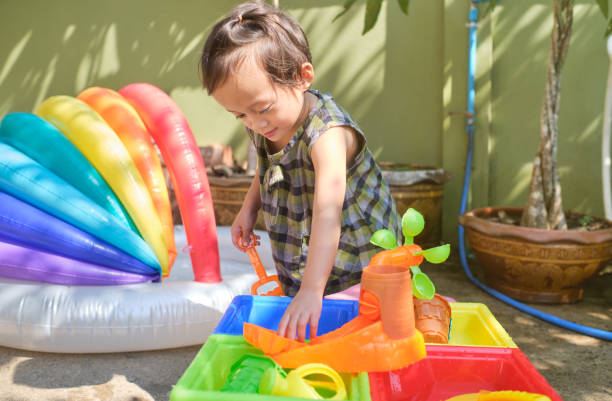
A child’s intense interest in adult daily activities is no coincidence. In the Montessori view, children aged 1.5 to 6 years are in a crucial “Sensitive Period for Coordination” and a “Sensitive Period for Imitation.” They long to learn skills, understand order, and confirm their status as capable members of the family community.
“When we say, ‘You’re too small; don’t make a mess,’ we are not just refusing help; we are rejecting the natural expression of the child’s inner developmental needs.”
Over time, children may begin to believe that the skills necessary for life have nothing to do with them, leading to a loss of self-confidence.
Core Montessori Concept: Life is Education
Practical life exercises are the cornerstone of the Montessori system, taking precedence even over sensory, math, or language education. This is because they build the foundational abilities for all future learning:
- Concentration: Completing multi-step chores, like wiping a table, requires sustained attention.
- Sense of Order: Understanding the sequence of events (placing the tablecloth before the cutlery) is the prototype of logical thinking.
- Fine Motor Skills: Pouring water or buttoning clothes prepares the hands for future writing.
- Independence & Responsibility: Caring for oneself and the environment is the root of self-esteem.
- Willpower: Overcoming difficulties, such as picking up spilled beans, strengthens a child’s perseverance.
Family Montessori Lab: Three Transformation Plans
You don’t need to renovate your home. Simply adjust your perspective and methods to turn daily life into a classroom.
Plan 1: Sensory and Movement Paradise in the Kitchen
- Provide a small pitcher and cup to practice pouring—starting with beans or rice before moving to water.
- Encourage cleaning by offering a small sponge for a plastic bowl or a towel to wipe their own placemat.
- In food preparation, let them use a safe banana knife or stir yogurt, which serves as excellent hand-eye coordination training.
Plan 2: Order and Aesthetics in the Living Room
- Utilize matching and sorting by asking them to find pairs of socks or categorize Montessori toys; this directly relates to the mathematical concepts of sets and logic.
- For environment care, provide a dedicated rag for dusting or a spray bottle for plants.
Plan 3: Independence in Personal Care
- Focus on dressing by allowing them to complete the final step (like pulling up pants).
- Create a wash-up routine using simple pictures to show the sequence of brushing teeth or washing hands.
[Discover how to empower your child’s independence today.]
From Life to Materials: Elevating Inner Needs
When a child shows focused interest in a skill, introducing specific Montessori toys (or materials) can refine their learning. These tools isolate core challenges for repeated practice.
| Feature | Benefit for the Child |
|---|---|
| Control of Error | Immediate physical feedback allows for self-correction and independent problem-solving. |
| Abstract Bridge | Matches shapes to absorb geometric properties, laying the groundwork for math. |
| Refined Movement | Grasping and aligning mimics real-life utensil usage and organization. |
| Focus Container | Natural materials and gentle colors encourage a complete work cycle. |
The Shift in Adult Roles: From “Servant” to “Guide”
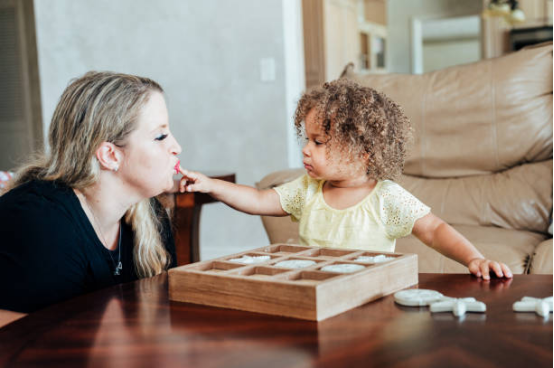
The biggest challenge is often the adult, not the child. We must undergo three mindset shifts:
- Accept “Imperfection”: Focus on the process rather than the result.
- Allow “Enough Time”: Don’t take over because you are in a hurry. Slow is fast.
- Be an “Elegant Model”: Demonstrate with slow, clear, decomposed movements, then step back.
FAQ (Frequently Asked Questions)
Q1: What if my child loses interest in chores quickly?
This is normal. Check if the task is too difficult—frustration kills interest.
Ensure your invitation is a sincere request for help rather than a command. Keep tools child-sized and accessible.
Sometimes, introducing a “Shape Sorting Toy” can reignite passion by providing the clear feedback that household tasks might lack.
Q2: Is there a conflict between life exercises and Montessori toys?
Not at all; they are complementary. Daily life is the “application field,” while Montessori toys are the “training ground.”
Use daily life as the foundation and introduce materials when you notice a specific developmental urge (like the desire for order).
Conclusion: The Best Tool is the Life You Share
True Montessori education starts when we stop seeing children as “trouble” and start hearing their plea:
“Help me to do it myself.”
Next time you prepare dinner, hand over a small basket of leaves. You are giving more than a chore; you are giving deep trust.
This sense of value is something no expensive toy can provide. Education is already happening in every loving moment of shared life.
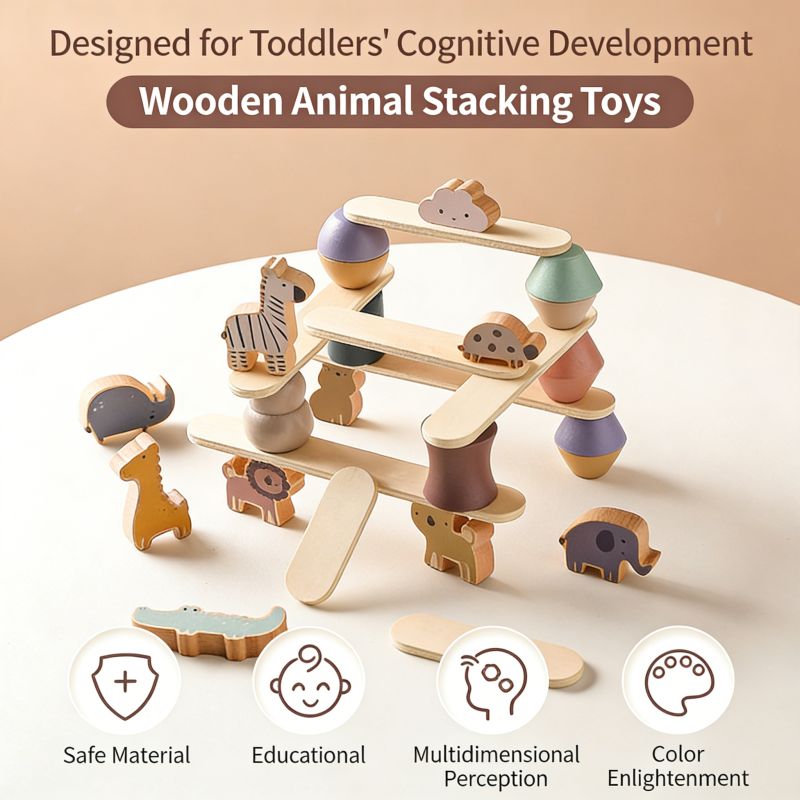
Support practical life skills at home with Montessori toys designed for fine motor focus and independent learning routines.