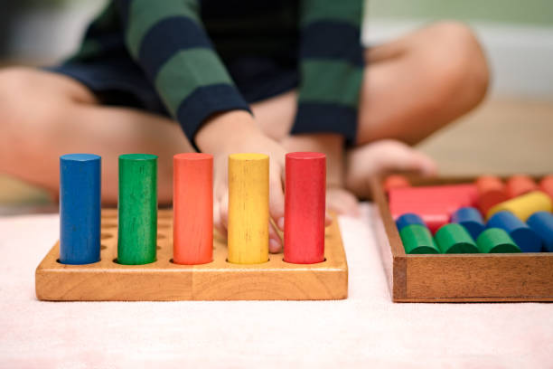
Have you ever had one of those moments? Looking at the living room floor scattered with toys—plastic train tracks mixed with building blocks, plush animals crushed under picture books—and feeling a deep sense of exhaustion and powerlessness?
You’ve bought plenty of toys, yet your child often acts “bored,” jumping from one thing to another, struggling to focus. The problem might not be the quantity or variety of toys, but the way they are presented. A chaotic environment is, in itself, a massive distraction to a child’s concentration.
Today, we aren’t talking about specific toys but diving into a more fundamental dimension: home environment creation. This is the cornerstone of Montessori education and the key to doubling the value of every Montessori toy you own.
Chaos vs. Order: How the Environment “Educates” a Child
Environments speak. To a 4-6-year-old, a messy, haphazard space sends a message:
“Things can be thrown anywhere, attention can shift at will, and rules are blurry.”
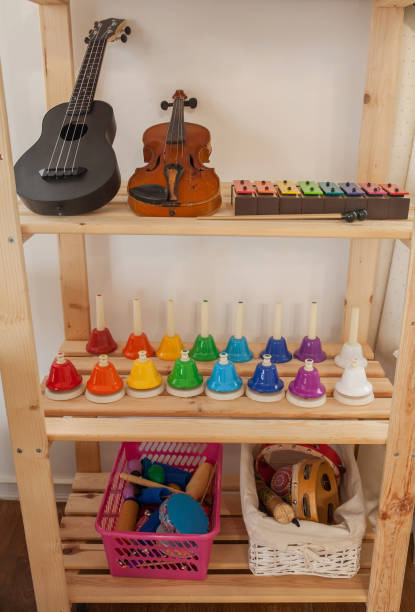
Conversely, an ordered, simple, and aesthetic Montessori-style environment silently communicates:
“Everything has its place, every activity has its purpose, and you can complete important work here independently and with focus.”
The core goal of this environment isn’t to look “neat and tidy” for guests; it is to support the development of independence and concentration. When children can see all their choices clearly and access items on their own, their internal sense of order and self-efficacy grows quietly.
3 Core Principles for Creating a Montessori Corner at Home
You don’t need to turn your house into a classroom. Simply follow these principles in a corner of the nursery or living room to bring about transformative changes.
1. Less is More: Implement a “Toy Rotation System”
Store most toys away and leave only a small number (e.g., 5-8 items) displayed on open, low shelves or in baskets. This drastically reduces visual noise and decision fatigue.
Rotate them every week or two based on the child’s interests. You’ll find that “forgotten” toys are welcomed like new friends when they reappear. This principle is perfect for managing the Montessori toys you’ve carefully selected, ensuring each one delivers maximum value at the right time.
2. See it, Reach it, Return it: Child-Scaled Display
Furniture and displays must be child-sized. Every toy should be presented completely and beautifully in a tray or basket, allowing the child to see exactly what it is and how to play with it.
A box full of jumbled parts is daunting, while a tray neatly holding a full set of Geometric Inset Cylinders is a clear, attractive “invitation to work.” Once finished, the child can easily return it to its original state, completing the cycle of work—an excellent exercise in responsibility and order.
[Transform your child’s focus today by curating their space.]
3. Define Clear “Work” Areas
Place a small rug or work mat on the floor to define the activity boundaries. This tiny area magically helps the child gather their attention, telling them:
“Here, you can focus on the task at hand.”
It also protects their progress; for instance, a half-built complex structure won’t be accidentally knocked over by someone walking by.
The Toy Itself is the Starting Point: A Classic Example
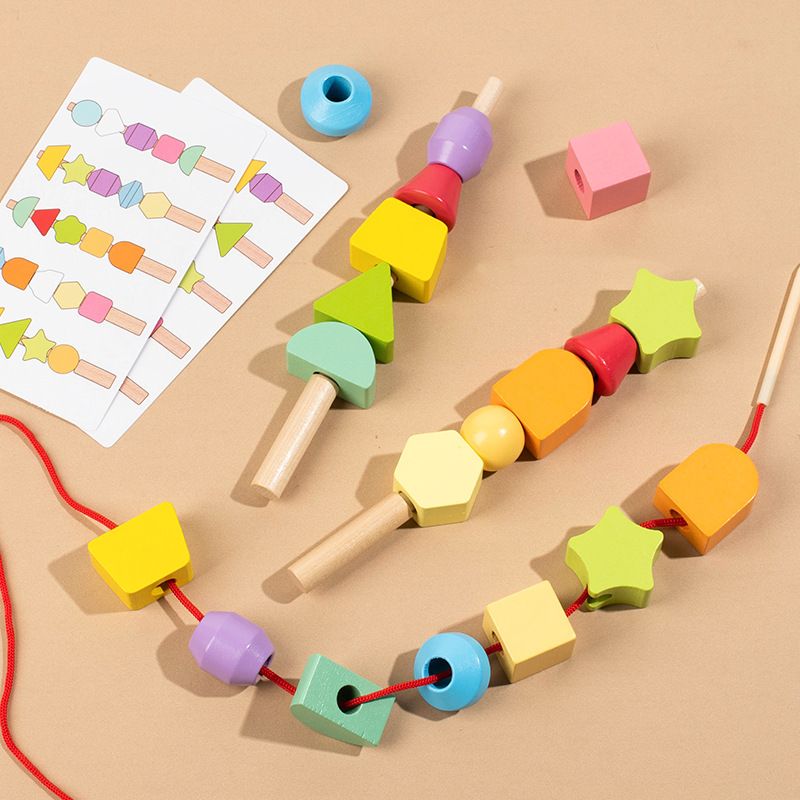
Once the environment is set, what do we put in it? This is where a well-designed, purposeful Montessori toy becomes the “star.” These Montessori toys usually feature “control of error,” allowing children to explore autonomously without constant adult correction.
Take the classic Montessori Cylinder Blocks as an example. It is more than just a shape-matching toy. When presented as a complete “work” on a wooden tray, it carries multiple educational intentions:
- Sensory Refinement: By grasping the small knobs (preparing for future pencil grip), the child perceives subtle differences in height, diameter, and depth through muscle memory.
- Visual Discrimination & Error Control: The child discovers that each cylinder fits into only one hole. If placed incorrectly, it either sticks out or sinks too deep. This self-correcting mechanism builds confidence and problem-solving skills.
- Order & Logic: The work begins by removing all cylinders, then comparing, matching, and returning them one by one. This process is a perfect logical sequence exercise.
This natural wood toy, with its rounded edges, sits quietly on the shelf as an invitation. It doesn’t scream “play with me” like electronic toys; instead, it whispers:
“Here is a puzzle about size and space, waiting for you to solve.”
From “Toy Pile” to “Discovery Corner”: Your Action Checklist
|
Step |
Action Item |
|---|---|
|
Step 1 |
Select a Corner: Find a well-lit, quiet spot and clear the clutter. |
|
Step 2 |
Invest in Basics: Get an open low shelf, a small table/chair, and a work mat. |
|
Step 3 |
Screen & Categorize: Pick current favorites with your child and box up the rest. |
|
Step 4 |
Beautify Display: Use trays for wooden Montessori toys. Ensure they are clean and complete. |
|
Step 5 |
Model & Step Back: Demonstrate how to use the mat, then observe without interfering. |
Frequently Asked Questions (FAQ)
Q1: If I rotate toys, what if the child asks for one that is put away?
A: This shows the child is thinking! Acknowledge their memory: “Oh, you remember the forest blocks? They are resting right now.” Then offer a choice: “We can rotate them back this weekend. For now, do you see any new work on the shelf you’d like to explore?” This teaches delayed gratification and valuing resources.
Q2: These wooden toys look a bit “cold.” What if my child doesn’t play with them?
A: First, check if there are flashy electronic toys nearby causing a distraction. Second, use “Work Modeling.” Sit on the mat and operate the toy slowly and focusly. Children are natural imitators; your calm “work state” has a magnetic magic that will eventually draw them in. We are “preparers,” not “enforcers.”
The Environment is the Third Teacher
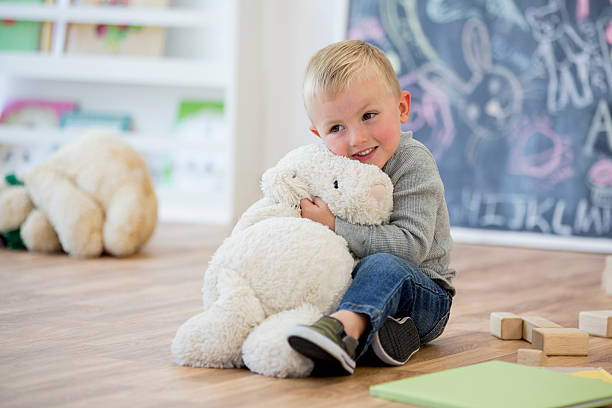
In Montessori philosophy, the adult is the first teacher, the child is the second, and the environment is the vital third teacher.
A chaotic environment teaches distraction; a prepared, beautiful environment teaches focus, independence, and respect.
Investing in quality toys is a start, but the real value is unlocked by the “prepared environment.”
When you see your child immersed in a task for twenty minutes with a look of serene satisfaction, you will know every change was worth it. Start today by clearing one corner and elegantly displaying just one toy.
Explore thoughtfully designed Montessori toys that support focus, independence, and an ordered home learning environment.