In parenting, some moments are etched forever in your memory, sparkling. They are often not when the child recites the alphabet or completes a complex drawing. The moments that truly tighten your heart and warm your eyes are usually much quieter.
For example, that Sunday afternoon.
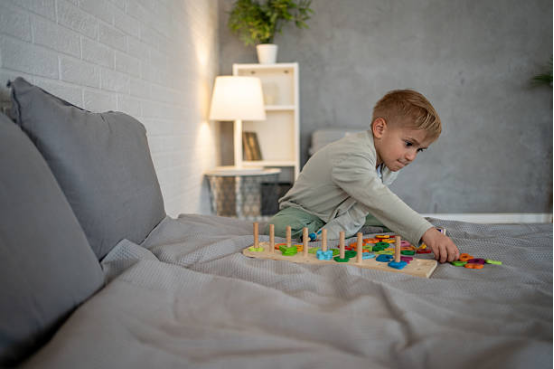
Sunlight slanted into the living room, casting a warm patch on the carpet. My son, Ryan, just turned five and sat in this light, in front of a set of items—ten solid wooden rods alternating red and blue, varying in length, like a group of fallen giants. It was our newly acquired Montessori rod set. A few minutes ago, they had been neatly arranged on a tray; now, they were scattered, forming an abstract “chaos” painting.
Ryan didn’t call me. He quietly observed them, a seriousness of focus I rarely see on his face. His gaze moved from the longest rod (almost as long as his arm) to the shortest (shorter than his palm). I knew a personal challenge had begun.
That Quiet Afternoon: An Exploration of “Length”
As parents, we are always eager to “teach.” We point, we explain, and we impatiently want to unfold the world map we know before our child. But Montessori philosophy gave me a gentle wake-up call: the true learning map must be measured by the child’s own steps and drawn with their own hands.
So when Ryan faced the scattered rods, I forced myself to sit on the distant sofa, picking up a book (though not a single word sank in). My role was not coach, but witness.
He reached out. Almost randomly, he picked up a medium-length rod. He placed it on the carpet, looking left and right, as if searching for the right spot. Then he picked a shorter one, placing it next to the first. His intuition said the short one should be at one end. But it was too close, misaligned.
At that moment, the most charming feature of Montessori education began to work: built-in error control. Ryan paused. Tilting his head, he stared at the rods. Inside his small body, an internal “order detector” seemed to buzz. Something was off. What was wrong?
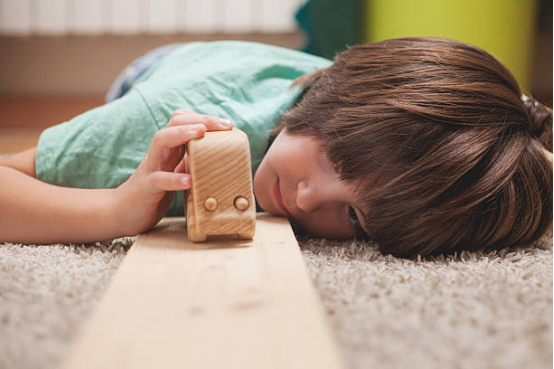
He lay down, eyes level with the rods. He slid his finger along the first rod to the second. His finger encountered a “step” in the air—because the ends weren’t aligned. No one said, “You’re wrong.” The material itself, through his observation and tactile exploration, provided the most direct, objective feedback.
Challenge, Attempt, and Self-Correction: A Silent Internal Dialogue
He moved the second rod aside but did not give up. Searching among the remaining rods, he picked a longer one. Placing it alongside the first, he carefully aligned one end. The other end revealed clear differences—the long one longer, the short one shorter. A visual sequence emerged.
I could see his brain working at full speed. This was no longer simple “play,” but a rigorous, self-directed task:
- Compare: Visually scan and assess lengths.
- Hypothesize: “This one might be longer than that one.”
- Test: Place them side by side and observe.
- Correct: If the result doesn’t match the internal order, backtrack and adjust.
There were frustrations. He once placed the third-longest rod in the fourth spot, breaking the sequence. Attempting the next rod, he paused as the “step” looked absurd. His brow furrowed.
My heart lifted, almost saying, “Sweetie, just switch these two…” but I restrained myself. I remembered Montessori’s words: “Never help a child unless invited.”
Ryan didn’t invite me. He took a deep breath—I could hear the small, determined inhale—and did something remarkable: he pushed the half-finished sequence aside and started over.
This was not giving up. It was a strategic reset. He applied logic and problem-solving. This time, he was systematic: longest rod first, like a flag planted on the carpet. Then, like a king selecting guards, the next longest…
Time passed with quiet breaths and the subtle scratch of wood against carpet. Five minutes, ten minutes. Sunlight slowly moved across the living room. Finally, he picked up the last, shortest rod and placed it at the sequence start, carefully aligned with its neighbor.
Beyond Sorting: Building Inner Confidence
Finished.
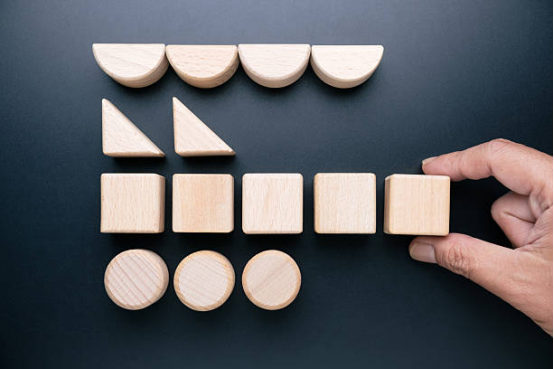
No cheering, no immediate praise-seeking. He leaned back, like an artist surveying a just-completed painting. His gaze swept the perfect sequence, short to long, like a wooden rainbow.
Then he turned to me. Eyes sparkling, cheeks flushed from concentration and effort. A calm, radiant smile blossomed.
“Mom,” he said, with a weighty sense of satisfaction I had never heard before, “look. I did it.”
At that moment, I felt more than pride. I felt profound awe. That quiet afternoon, Ryan didn’t learn a new word or math formula. But he learned something far more important:
- I can do it: through sustained, purposeful effort, he overcame chaos and created order. Success came from within, independent of external rewards.
- The value of focus: He experienced the flow state of fully investing attention into a task—joy surpassing passive entertainment.
- Resilience: Encountering obstacles, he didn’t ask for help but started over, learning that frustration is part of the process, not the endpoint.
- A healthy relationship with work: This activity was structured, goal-oriented, challenging, and rewarding—instilling dignity and efficacy.
This is one ultimate purpose of Montessori toys. Beyond teaching length sorting, it shapes mental qualities: independence, focus, problem-solving, and implicit confidence.
Why This Montessori Toy Facilitated All of This
Reflecting later, why did this simple Montessori rod set trigger such profound learning?
The design itself answers:
- Clear challenge: Single, pure goal—sort by length. No distractions from color, sound, or other variables.
- Self-correcting property: The rods visually show correctness. The child becomes their own teacher, cultivating critical thinking and self-assessment.
- Appropriate difficulty: Ten gradients for 4–6-year-olds offer challenge without despair. Sweet spot of the “zone of proximal development.”
- Real, beautiful materials: Solid wood weight, smooth touch, and clear red-blue segments provide dignity and aesthetics, inviting respectful engagement.
Resonance from Other Parents
Q: What if my child gets frustrated and pushes Montessori toys aside? Will this hurt confidence?
A: Completely normal—part of learning! First, acknowledge feelings: “It’s tricky and frustrating, isn’t it?” Don’t force continuation or remove Montessori toys. Suggest: “Maybe we can put it back and try tomorrow?” Calm pauses are often more constructive than forced success. Ensure a quiet, pressure-free environment to reduce frustration.
Q: Can the sense of accomplishment from Montessori toys transfer to learning or life?
A: Absolutely. This is the most valuable transfer. Operating Montessori materials builds a mental habit and self-awareness. Repeatedly solving sorting problems forms neural pathways: observe → try strategies → evaluate → adjust → solve. This mindset appears in puzzles, learning to tie shoes, or conflicts with peers. Children learn a problem-solving mindset, not just content.
Conclusion: Create Your “I Can Do It” Moments

That afternoon, Ryan’s glow was one of the most precious gains in my parenting journey. It reminded me: the best we can do isn’t fill their time or preload knowledge, but prepare the environment and step back.
Choosing a Montessori toy like a rod set is not buying sticks—it’s crafting a stage where challenges are clear, tools are appropriate, and the spotlight comes from within.
You invite your child to star in a play called “Independence,” and you, the parent, are a trusting audience, applauding as he turns to you, eyes shining, saying, “Look, I did it.”
This intrinsic confidence is the strongest life gift you can give. From this perspective, a well-designed Montessori toy is no longer a mere object but a bridge connecting the child’s current challenges to a strong, confident, independent future self.