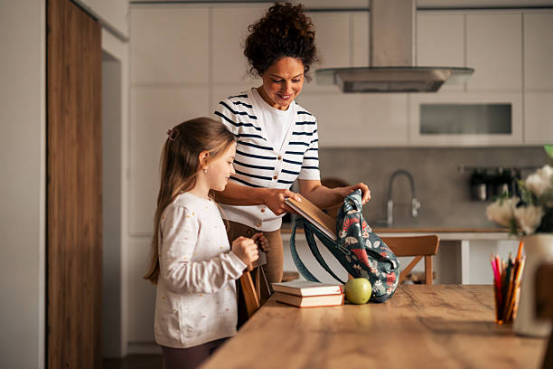
Does your home have a “little touch maniac”? Someone who can’t help but experience everything through their hands—feeling the textures of a bowl during dinner, brushing their hands against every railing while walking, obsessing over clothing labels, or having distinct preferences for the feel of the sofa? Often, our knee-jerk reaction is, “Don’t touch that; keep your hands still.”
But did you know? You might be inadvertently interrupting a vital “learning project” led by the child’s brain.
This seemingly “restless” need to touch is actually a core manifestation of the Sensory Development Period. Today, we will explore a foundational yet profound area of Montessori education: how sensory education—specifically the sense of touch—becomes the cornerstone of a child’s cognition and how we can intelligently support it.
“Thinking with Hands”: The Underrated Power of Tactile Learning
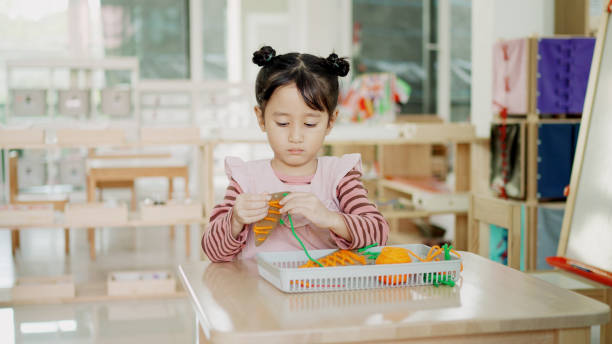
We live in a visually dominant era and often assume “seeing” is the primary channel for learning. However, for children aged 0-6, tactile exploration is the core pipeline for understanding object properties, establishing spatial relationships, and developing abstract thinking.
Dr. Maria Montessori referred to the child’s hand as the “organ of intelligence.” She believed that children construct their intellect through the manipulation of their hands. Every touch, grasp, and press is the brain receiving and analyzing critical data about the world:
- Is it hard or soft?
- Is it smooth or rough?
- Is it cold or warm?
- Is it light or heavy?
When you tell a child, “Don’t touch,” you aren’t just stopping a movement; you are cutting off the neural pathways rapidly connecting in their brain.
Tactile Sensitive Period: More Than Just “Touching”
In Montessori theory, the ages between 2.5 and 6 years represent the sensory refinement period. Children move beyond aimless grasping and begin to consciously categorize, order, and pair the information they receive. Tactile development at this stage directly relates to:
- Foundations of Cognitive Development: Discriminating between textures, temperatures, and weights serves as the sensory bedrock for future scientific concepts in physics and chemistry.
- Fine Motor Skills & Writing Readiness: Fingertip sensitivity (stereognostic sense) is directly linked to pencil control. A child who cannot distinguish textures may struggle with the nuances of stroke pressure later on.
- Richness of Language: Tactile experiences provide a vocabulary library. Phrases like “rough as bark” or “smooth as a pebble” stem from real sensory memories.
- Emotional Security: Comfortable tactile experiences (like soft fabrics) bring calm and safety, while chaotic or unpleasant textures can lead to anxiety.
[Discover the perfect tools for sensory growth.]
From Random Touching to Focused Exploration
How do we guide a child’s aimless “touch addiction” into constructive exploration? The answer lies in providing the right “tools.” Take the classic Montessori Toys Fabric Drum as an example. Its design meets the internal needs of tactile development through:
- A Systematic Texture Library: It features contrasting fabrics like silk, linen, wool, and corduroy, acting as a “miniature tactile museum.”
- Self-Driven Discovery: The process of “touch-compare-touch again” is an autonomous learning loop driven by curiosity, extending the child’s concentration span.
- Integration of Skills: Rotating the drum exercises hand-eye coordination and bilateral integration.
- Control of Error: There is no “right or wrong.” The child’s attention stays on the sensory experience itself, protecting their confidence.
Integrating Tactile Learning into Daily Life

Beyond professional materials, your home is full of tactile resources. You can create a sensory-rich environment without high costs:
| Activity | Method | Developmental Goal |
|---|---|---|
| “Mystery Bag” | Place familiar objects (pinecones, spoons, stones) in an opaque bag. | Tactile recognition and memory association. |
| Chore-Based Lessons | Feel the bubbles while washing or the stiffness of denim vs. cotton. | Connecting daily life to sensory concepts. |
| Nature Scavenger Hunt | Collect rough bark, smooth leaves, and moist soil to create a sensory board. | Environmental observation and appreciation. |
| Graded Vocabulary | Use comparative words like “rougher” or “smoothest” during play. | Development of mathematical and linguistic logic. |
Frequently Asked Questions (FAQ)
Q1: My child resists certain textures (like sand or clay). Is this tactile sensitivity?
A: This may be tactile defensiveness. Always respect their feelings and “follow the child.” Start with predictable, gentle textures (like dry beans) before moving to wet sand. Professional materials like a Montessori Toys Fabric Drum provide a safe, bounded starting point for sensitive children.
Q2: Do I need to buy every Montessori toy?
A: Absolutely not! The core of home education is the philosophy, not the equipment. Start with one or two versatile pieces and turn daily tasks like dishwashing or folding laundry into “sensory lessons.” Your awareness is the most important tool.
Conclusion: Let Hands Lead the Way to Wisdom
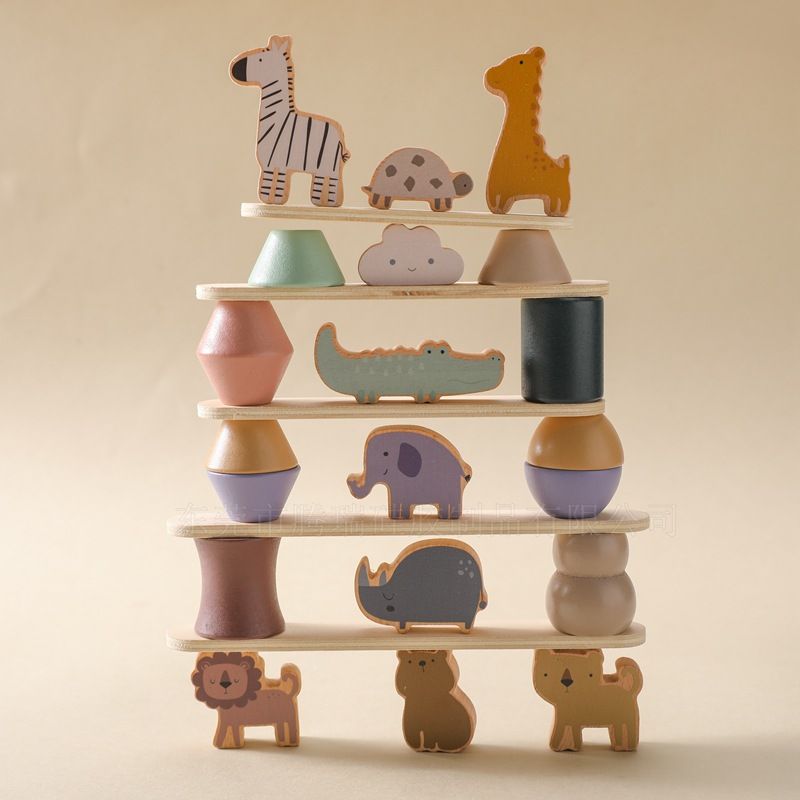
Next time you see your child reaching out to explore, pause before you say, “Don’t touch.” Recognize that beneath those small hands, a clearer, more orderly, and richer world is being constructed.
Providing professional tactile tools isn’t just about satisfying a whim; it is about pouring the solid foundation for their intellectual skyscraper.
From today, view every touch of Montessori toys as a learning opportunity. You will see the reward in your child’s sharper observation, precise expression, and quiet focus.